Carrier Screening Market Size, Share, and Growth Report Through 2034
The global carrier screening market is projected to grow from USD 1.88 billion in 2026 to USD 3.08 billion by 2034, exhibiting a CAGR of 6.4%

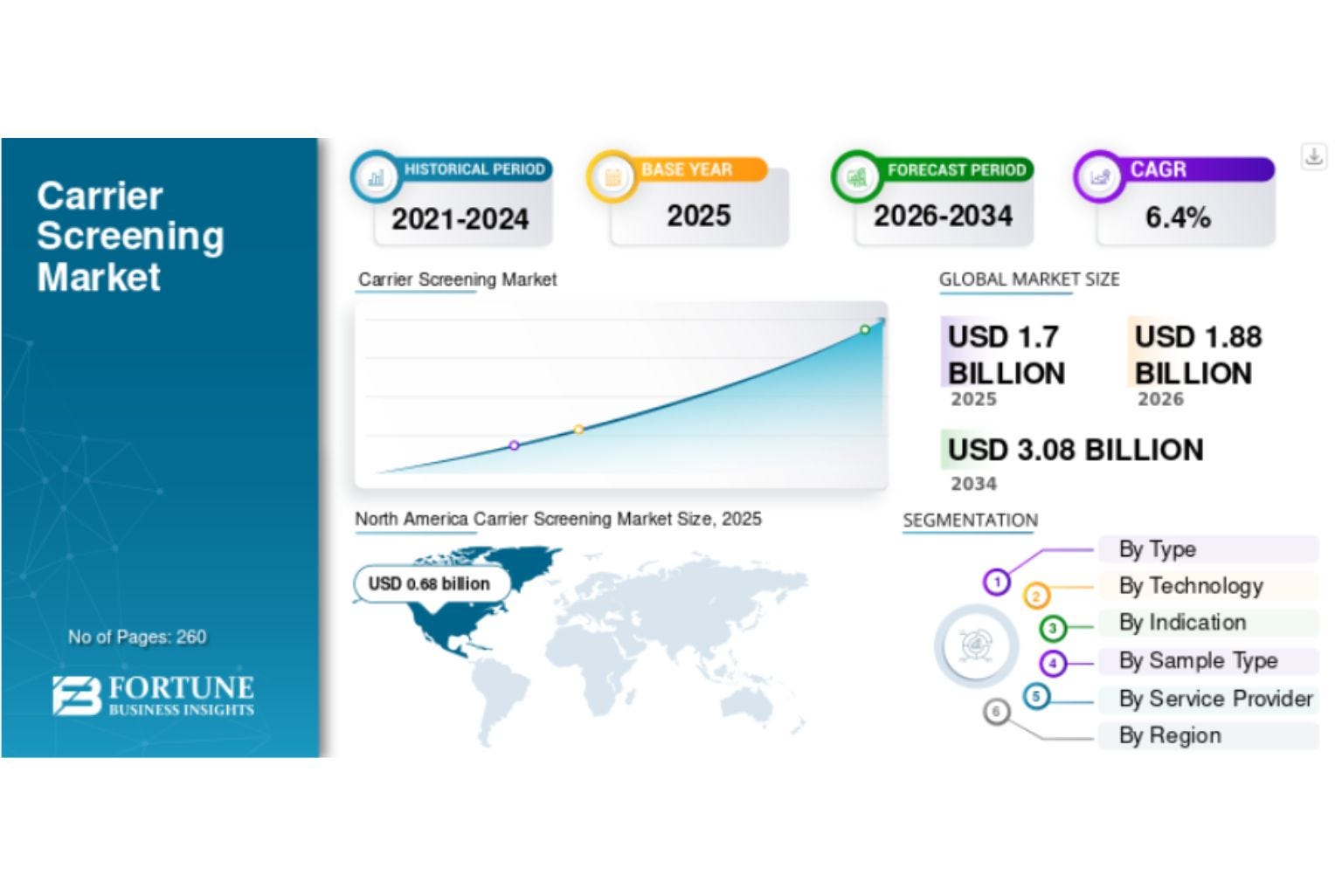
According to Fortune Business Insights, the global carrier screening market was valued at USD 1.70 billion in 2025 and is projected to grow from USD 1.88 billion in 2026 to USD 3.08 billion by 2034, exhibiting a CAGR of 6.4% during the forecast period of 2026-2034. North America dominated the market in 2025, generating approximately USD 0.68 billion in revenue, supported by strong healthcare infrastructure and widespread adoption of genetic testing services.
The global carrier screening market is witnessing substantial growth as healthcare systems increasingly emphasize preventive medicine, reproductive health, and early identification of inherited genetic disorders. Carrier screening is a genetic testing process used to determine whether an individual carries a gene mutation that could be passed on to their offspring. The growing awareness of genetic diseases, advancements in next-generation sequencing technologies, and the rising adoption of personalized healthcare solutions are driving market expansion worldwide.
Information Source: https://www.fortunebusinessinsights.com/carrier-screening-market-114944
Market Drivers
One of the primary factors fueling market growth is the increasing prevalence of inherited genetic disorders such as cystic fibrosis, sickle cell anemia, spinal muscular atrophy, and Tay-Sachs disease. As awareness regarding these conditions rises, prospective parents are increasingly opting for carrier screening tests before conception or during pregnancy.
Technological advancements in molecular diagnostics and genomic sequencing have significantly improved the accuracy, speed, and affordability of carrier screening procedures. Expanded carrier screening panels can now analyze hundreds of genetic conditions simultaneously, making testing more comprehensive and accessible.
The growing trend of delayed pregnancies is another major growth driver. Advanced maternal age is associated with a higher risk of genetic abnormalities, prompting healthcare professionals to recommend carrier screening as part of routine reproductive health assessments. Furthermore, increasing investments in genetic research and the integration of precision medicine into healthcare systems are supporting market development.
Market Restraints
Despite favorable growth prospects, certain challenges continue to limit market expansion. High testing costs in some regions, limited reimbursement policies, and disparities in access to advanced healthcare services can restrict adoption rates. Ethical concerns related to genetic testing and privacy issues surrounding genetic information also create barriers for broader acceptance.
Additionally, the lack of awareness regarding carrier screening benefits in developing economies and shortages of trained genetic counselors may hinder market penetration. Regulatory complexities associated with genetic testing products can further slow the introduction of innovative screening solutions.
Segment Analysis
Based on screening type, the market is segmented into expanded carrier screening and targeted disease carrier screening. Expanded carrier screening is gaining significant popularity due to its ability to detect a broad range of inherited conditions irrespective of ethnicity or family history.
By technology, next-generation sequencing and polymerase chain reaction technologies continue to dominate due to their superior accuracy and efficiency. These technologies enable healthcare providers to deliver precise genetic insights while reducing turnaround times.
In terms of end users, hospitals, diagnostic laboratories, fertility clinics, and physician offices represent major demand centers. Fertility clinics are increasingly incorporating carrier screening into reproductive planning programs, contributing to growing market revenue.
Regional Insights
North America remains the leading regional market owing to strong healthcare infrastructure, favorable reimbursement frameworks, and the presence of major genetic testing companies. High awareness levels among healthcare providers and patients continue to support market growth across the region.
Europe also represents a significant market share due to increasing adoption of genetic testing technologies and supportive government healthcare initiatives. Countries such as Germany, the U.K., and France are witnessing growing demand for carrier screening services.
The Asia Pacific region is expected to experience the fastest growth during the forecast period. Rising healthcare expenditure, improving diagnostic capabilities, expanding awareness regarding genetic disorders, and growing access to advanced medical technologies are contributing to regional expansion. Emerging economies such as China and India are expected to create lucrative opportunities for market participants.
Competitive Landscape
The carrier screening market is characterized by strategic collaborations, technological innovations, acquisitions, and product launches aimed at expanding testing capabilities and market reach. Leading companies are focusing on developing comprehensive screening panels and enhancing genetic counseling services to strengthen their competitive positions.
Key Players
Natera, Inc.
Labcorp
Quest Diagnostics Incorporated
Myriad Genetics, Inc.
Illumina, Inc.
Thermo Fisher Scientific Inc.
Fulgent Genetics
Eurofins Scientific
FAQs
1. What is the size and share of the carrier screening market?
According to Fortune Business Insights, the global carrier screening market was valued at USD 1.70 billion in 2025 and is projected to grow from USD 1.88 billion in 2026 to USD 3.08 billion by 2034 at a CAGR of 6.4%. North America held a significant share, generating approximately USD 0.68 billion in 2025.
2. What factors are driving the growth of the carrier screening market?
The market is driven by rising awareness of inherited genetic disorders, advancements in genomic sequencing technologies, growing adoption of preventive healthcare, increasing demand for reproductive planning services, and the expansion of precision medicine initiatives.
3. Which region is expected to lead the carrier screening market?
North America currently leads the global market due to advanced healthcare infrastructure, widespread adoption of genetic testing, and the presence of major industry participants, while Asia Pacific is expected to register the fastest growth during the forecast period.